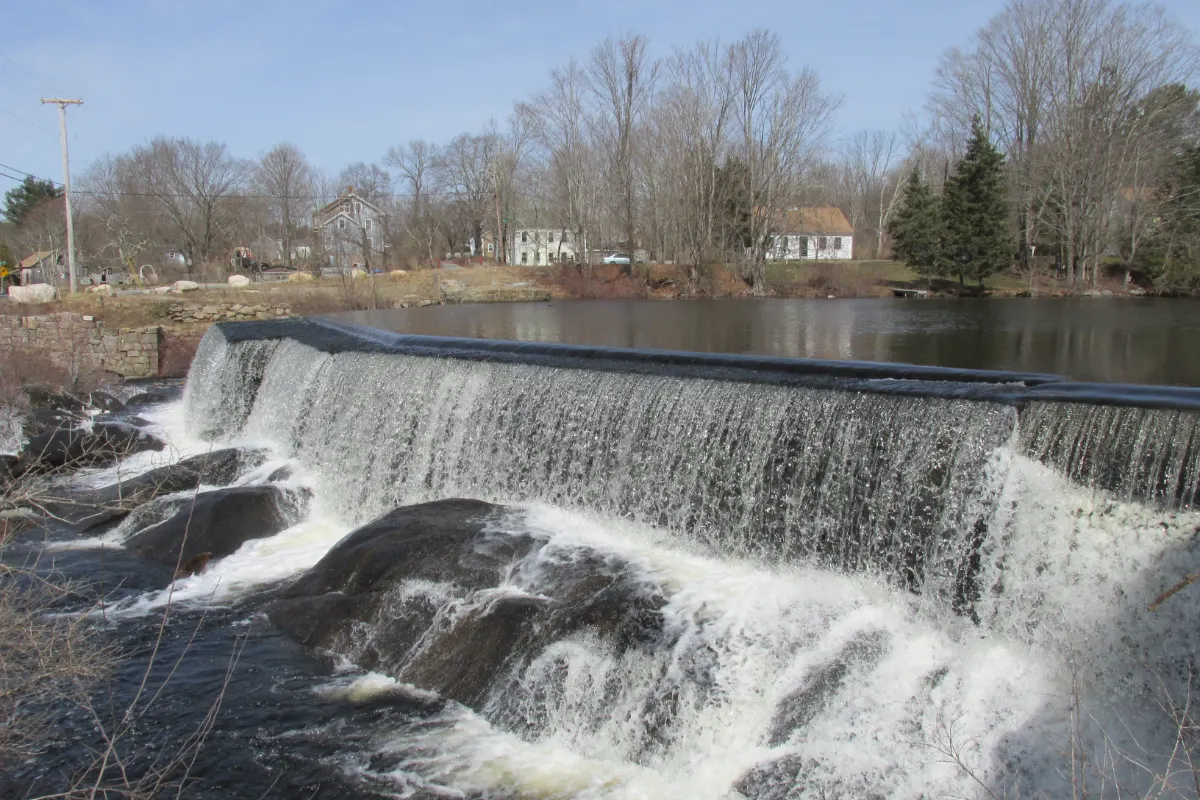
Septic systems along the Wood and Pawcatuck rivers
Richmond counts 123 miles of rivers and streams, and parts of town fall inside the Wood-Pawcatuck Wild and Scenic Rivers designation of March 12, 2019. A leachfield discharges to groundwater that feeds those rivers, so a failing system here is a stream and aquifer problem rather than a salt pond one.
EPA designated the entire Pawcatuck Basin aquifer system a Sole Source Aquifer in 1988. Richmond is not in the Salt Pond Region plan, which lists only Westerly, Charlestown, South Kingstown and Narragansett, so the coastal nitrogen mandate stops at the town line. When a field near wet ground gives out, see leach field replacement.
The well test before a Richmond Certificate of Occupancy
Richmond's Building Department requires homes on private wells to document compliance with drinking-water standards before it issues a Certificate of Occupancy. For a new house or a major rebuild, plan the well and septic layout together, since the distance between them affects both approvals. Neighboring wells can matter too, so the designer maps them.
That separation is set during design, after soils are tested and the seasonal high groundwater is measured between January 1 and April 1. Start with septic design and soil testing and our wet season water table testing guide so the well test is not the last surprise.
What Richmond asks of septic owners today
RIDEM's 2022 municipal summary lists a Richmond Onsite Wastewater Management Program that recommends voluntary system inspections, with no mandatory ordinance noted. There is no town inspection deadline, but state cesspool law still applies: selling a home with a cesspool starts a 12-month clock to replace it.
EPA puts routine maintenance at $250 to $500, needed every 3 to 5 years. Owners can book septic inspections or septic pumping on their own schedule, and the cesspool law explainer covers the sale deadline.
Using Richmond's septic loan info sheet
Richmond is a member town of the state's septic loan program (CSSLP). Its town info sheet, which is undated, lists a 1% fixed rate, loans up to $25,000, a $300 origination fee and no income limits. Those terms match RIIB's SFY2026 plan, which allows repayment over as long as 10 years.
The town posts a newer info sheet too; ask Town Hall which applies, and confirm with RIHousing, which underwrites the loans. RIDEM's published ranges, roughly $10,000 to $15,000 for conventional work and $23,000 to $32,000 for advanced systems, are undated starting points. Our RI septic loan program guide walks through the application.
This is general information, not legal or tax advice.
Getting septic answers at Town Hall in Wyoming
Richmond's Building Department works out of Town Hall at 5 Richmond Townhouse Road in Wyoming. It is open Monday, Wednesday and Thursday 8:30 to 4:00 and Tuesday 8:30 to 6:00, and closed Friday. Its page links to RIDEM onsite resources, since RIDEM issues the septic permit itself.
Richmond shares its Building Official with Hopkinton. For a full septic system replacement, the licensed designer files with RIDEM first. Pull the parcel's RIDEM permit history, kept online back to 1968, before talking about an older system. Compare nearby programs on our service areas page, or ask for a free estimate at 401-535-7951.
Richmond septic questions
Is there a mandatory septic inspection in Richmond?
Not according to RIDEM's 2022 summary, which lists voluntary inspections only. Charlestown, next door, does require one every three years, so check which town your parcel is in if you live in Carolina or Shannock. Buyers still have a state right to inspect within 10 days of a purchase agreement.
Do I need a nitrogen-reducing system in Richmond?
Not because of the salt pond rules. Richmond lies beyond the coastal Salt Pond and Narrow River zones that force nitrogen reduction on repairs. Soil tests, groundwater depth near the rivers, and well setbacks still decide the design, so the designer's evaluation determines what fits your lot.
How do I apply for the Richmond septic loan?
Start at Town Hall, since Richmond is enrolled in the program and RIHousing handles underwriting and servicing. The town info sheet lists up to $25,000 at a 1% fixed rate with a $300 origination fee. See the RIHousing septic loan page and confirm current terms first.
My house is in Hope Valley. Richmond or Hopkinton?
It depends on the parcel. Hope Valley is split between the two towns, and Richmond supplies its public water under an agreement with Hopkinton. Your tax bill shows which town the lot is in. Both towns lean on voluntary inspections and take part in the state septic loan program, but paperwork goes to different town halls.