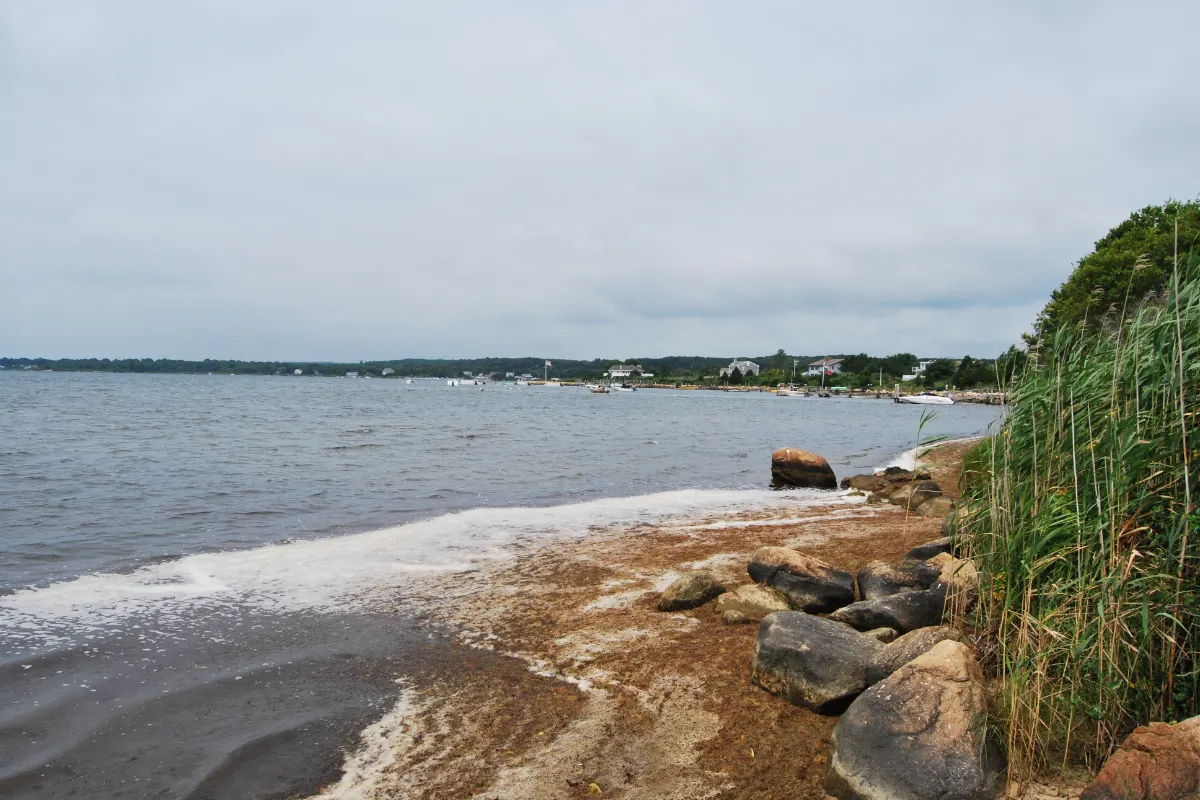
Chapter 210 and the Charlestown Wastewater Management District
Charlestown has run an On-Site Wastewater Management Program since 1994 under Code Chapter 210, which creates a town Wastewater Management District. Every system gets an on-site inspection at least once every three years, and no pumping schedule may be less frequent than once every six years.
The Wastewater Management Department at Town Hall, 4540 South County Trail, keeps a list of approved inspectors, and the Wastewater Management Commission can levy fines. Statewide, URI keeps a professional registry of inspectors who completed its training. Our septic inspections page explains the visit itself.
Sixty days after a failed Charlestown inspection
When a Charlestown inspection finds a failed system, Chapter 210 gives the owner 60 days to apply to RIDEM for a repair permit. That is a short window if the design needs soil work, so line up a designer as soon as the report flags a problem rather than waiting for a notice.
RIDEM says repair applications usually clear review in one to two weeks, but wet-season groundwater readings can only be taken from January 1 to April 1. Note that the 60 days runs to filing the permit application, not to finishing construction. See septic repair and septic design and soil testing.
Ninigret, Green Hill and Quonochontaug: nitrogen on every fix
Charlestown's three large salt ponds, Ninigret, Green Hill and Quonochontaug, lie inside the Salt Pond Region plan and its critical resource area. CRMC requires advanced nitrogen-reducing treatment for any new installation, repair, modification or replacement there, so an ordinary repair can become an advanced system project.
The plan also targets Lands Developed Beyond Carrying Capacity, lots under 80,000 square feet, where all new and replacement systems need nitrogen technology. EPA's 2021 profile calls septic systems the primary source of nitrogen pollution in Charlestown. Read our salt pond nitrogen rules guide and nitrogen-reducing systems page. Quonochontaug Pond reaches into Westerly as well.
Private wells and Charlestown's nitrate watch
The town states that Charlestown relies entirely on groundwater for drinking water, and it tracks nitrate using results from more than 360 private wells. Nitrogen from a leachfield can move toward the same groundwater a neighbor drinks, and that link is the backdrop for the town's inspection program.
Parts of Charlestown also fall in the Wood-Pawcatuck Wild and Scenic corridor. Villages include Carolina, shared with Richmond, and Quonochontaug on the coast. The pond shoreline continues east into South Kingstown, where Green Hill Pond is shared.
A cesspool phase-out that is nearly finished
Chapter 210 classes cesspools as substandard, and the town's phase-out program reports that 99.9 percent of polluting cesspools have been eliminated. EPA's Charlestown profile says most were replaced by 2016. Any that remain still need replacement, and state law adds a one-year deadline after a sale.
If you are buying one of the few holdouts, the replacement in this watershed will usually need nitrogen reduction. The statewide cesspool rules and our cesspool replacement overview explain both sides of that deal.
This is general information, not legal or tax advice.
Budgeting for an advanced system in Charlestown
RIDEM's published ranges show $23,000 to $32,000 for an advanced nitrogen-reducing design, versus about $10,000 to $15,000 for a conventional one. Neither figure is dated, so use them only to start planning. In the pond watersheds the advanced figure is the realistic planning number.
Charlestown takes part in the state septic loan program. RIIB's SFY2026 plan prices it at 1% interest on the remaining balance plus a $300 origination charge, over up to 10 years; RIHousing reports a $25,000 ceiling in most towns. Check current terms with Charlestown Town Hall or RIHousing before committing. See cesspool replacement cost in RI, browse other towns on the service areas page, or phone 401-535-7951 to get a free estimate.
This is general information, not legal or tax advice.
Charlestown septic questions
How often does Chapter 210 require an inspection?
At least once every three years under Chapter 210, with pumping no less often than once every six years. The inspector must be one the town approves. Charlestown's schedule is among the strictest in South County, so keep a copy of each report in case the Wastewater Management Department asks.
My system failed its Charlestown inspection. What now?
You have 60 days to apply to RIDEM for a repair permit. Hire a designer quickly, since soil and groundwater work can take time. If the lot drains to Ninigret, Green Hill or Quonochontaug Pond, expect the repair to need nitrogen-reducing treatment under the Salt Pond rules.
Do I need nitrogen reduction if I only replace the tank?
Maybe not. RIDEM's rules for the Salt Pond and Narrow River areas carve out limited exceptions for repairs that only replace the septic tank. Anything touching the leachfield or treatment generally triggers the requirement. Check your parcel with the RIDEM boundary tool and confirm with your designer.
Can I still have a cesspool in Charlestown?
Very few remain. Chapter 210 treats cesspools as substandard, and the town reports 99.9 percent of polluting cesspools are gone. If one turns up during a purchase, state law requires replacement within 12 months of the sale, and the new system will likely need nitrogen reduction near the ponds.